
- Homepage
- Author
- Alfred Bruneau (3)
- Anatole France (4)
- Auguste Maquet (4)
- Benoît Fourneyron (3)
- Beydts (louis) (4)
- Chateaubriand (5)
- Colette (4)
- Henri Barbusse (5)
- Jean-léon Gérôme (5)
- Julien DuprÉ (4)
- Louis Jouvet (4)
- Louise Read (6)
- Ludovic Halévy (4)
- Marcel Proust (5)
- Michel Chamillart (4)
- Paul Chabas (4)
- Paul Meurice (4)
- Roger Martin Du Gard (6)
- Sully Prudhomme (7)
- Violette Leduc (4)
- Other (4433)
- Era
- 18th Century (18)
- 1900 To 1960 (94)
- 1960s (5)
- 1970s (8)
- 19th (6)
- 19th Century (102)
- 20th Century (25)
- Beautiful Era (13)
- Belle Epoque (55)
- First Empire (10)
- First World War (4)
- Nineteenth (20)
- Nineteenth Century (13)
- Post-war (23)
- Restoration (17)
- Revolution (5)
- Roaring Twenties (30)
- Second Empire (24)
- Second World War (7)
- World War Ii (9)
- Other (4034)
- Language
- Period
- 18th Century (12)
- 1900 To 1960 (157)
- 1960s (2)
- 19th (2)
- 19th Century (134)
- 20th Century (15)
- Belle Epoque (10)
- Belle Époque (2)
- First Empire (2)
- Nineteenth (24)
- Nineteenth Century (5)
- Post-war (5)
- Restoration (7)
- Revolution (3)
- Roaring Twenties (4)
- Second Empire (6)
- World War I (3)
- Xixth (6)
- Xixth Century (11)
- Other (4112)
- Region
- Subject
PAUL HERVIEU letters & handwritten signed cards
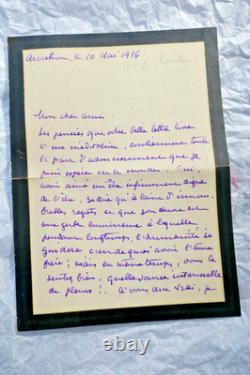
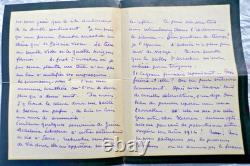
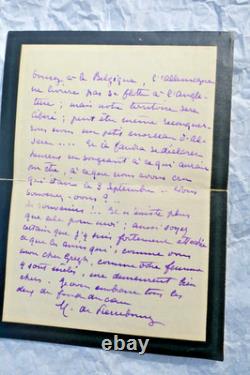
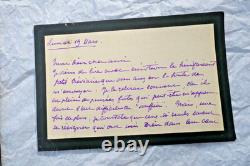
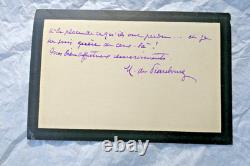
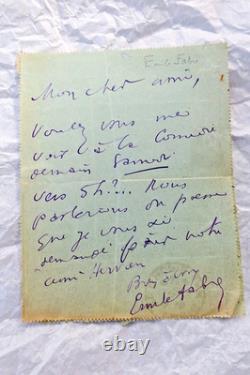
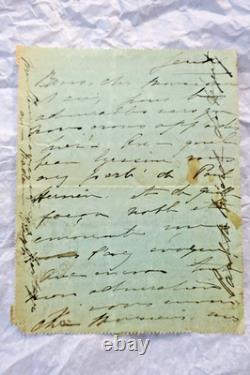
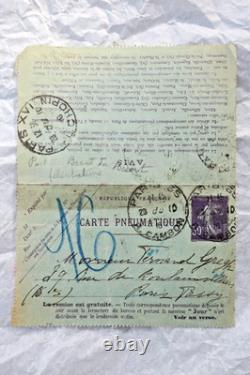
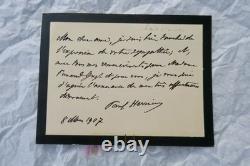
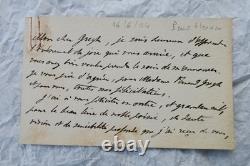
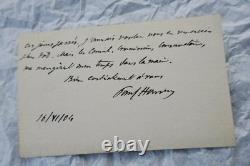
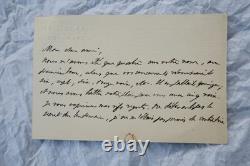
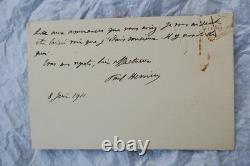
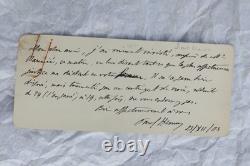
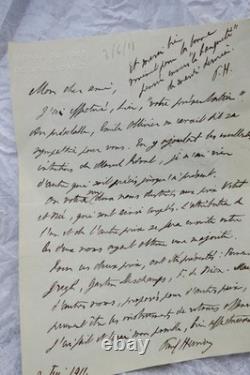
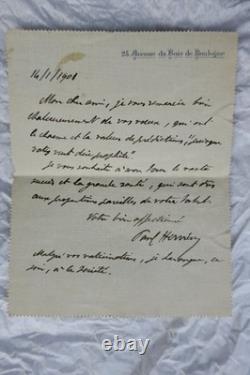
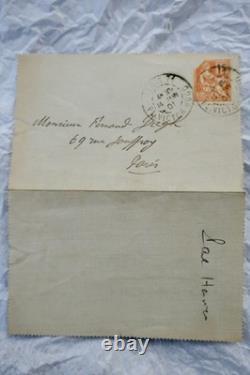
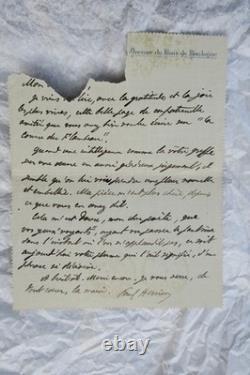
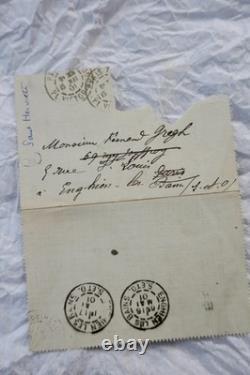
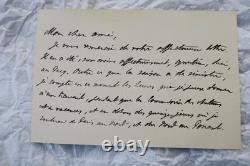
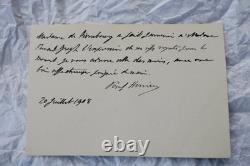
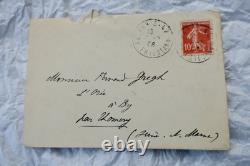


Four handwritten autograph letters and four handwritten autograph cards by Paul Hervieu, as well as two handwritten autograph letters by Madame de Pierrebourg, one handwritten autograph letter by Madame Béart de Bézert, and one handwritten autograph letter by Emile Fabre. At his home in the . He is a novelist and. Coming from a bourgeois family, he initially aimed for the bar, became a lawyer, and frequented political circles for a time. In 1881, he obtained a position as an attaché at the embassy in Mexico, which he did not hold for long.
Primarily interested in literature, he dedicated himself mainly to writing, while attending literary and social salons, such as those of Madame de Pierrebourg, who was his mistress, and Madame Émile Straus, where he mingled with writers like Marcel Proust, aristocrats like Princess Mathilde and Prince Georges Bibesco, actresses like Réjane, and artists like Edgar Degas. In 1883, he began his long friendship with Octave Mirbeau, of whom he became the confidant. That year, he collaborated under the pseudonym Liris in the ephemeral magazine founded by his new friend, which also featured contributions from Alfred Capus. This satirical weekly was anti-opportunistic but also anti-Semitic, intended, according to Mirbeau, “to make grimace all these false worlds of unpunished brigands of finance.” However, like Mirbeau, who would be among the most committed Dreyfus intellectuals, Hervieu would become a Dreyfusard.
This would lead to a failure in his first academic candidacy. He co-founded, with Gustave de Malherbe, the publishing house La Librairie moderne.
Concerned about the social issues of his time, he expressed them in psychological and social novels, in the manner of Paul Bourget, and in plays that were often moralistic. Aiming to rigorously analyze a situation and show its inevitable consequences, he staged characters who acted with extreme logic, devoid of any humanity, solely attentive to the sentiment of duty and social conventions.
This rigidity leads to dramatic outcomes that may seem excessive today. The plots unfold in aristocratic or social circles: the adulterous woman in L'Énigme, and in Le Réveil, the remarriage of a divorced woman in Le Dédale, and the care owed to children, whatever the consequences, in La Course du flambeau. "I do not believe he ever had a word of pity for the physical or moral sufferings he depicts with unflinching vigor. It is solely through the intensity of his descriptions or analyses that he reveals his emotion and provokes ours. Just as he was in his books, so he was in his life." Paul Hervieu, storyteller, moralist, and playwright. He succeeded in 1900 to seat 12 of the Académie française. He said of him: "Little Hervieu has a curious voice, it is like the distant voice of a somnambulist that his mesmerizer would make speak." He is buried in the Passy cemetery (Paris) next to his companion Madame de Pierrebourg, in literature Claude Ferval.